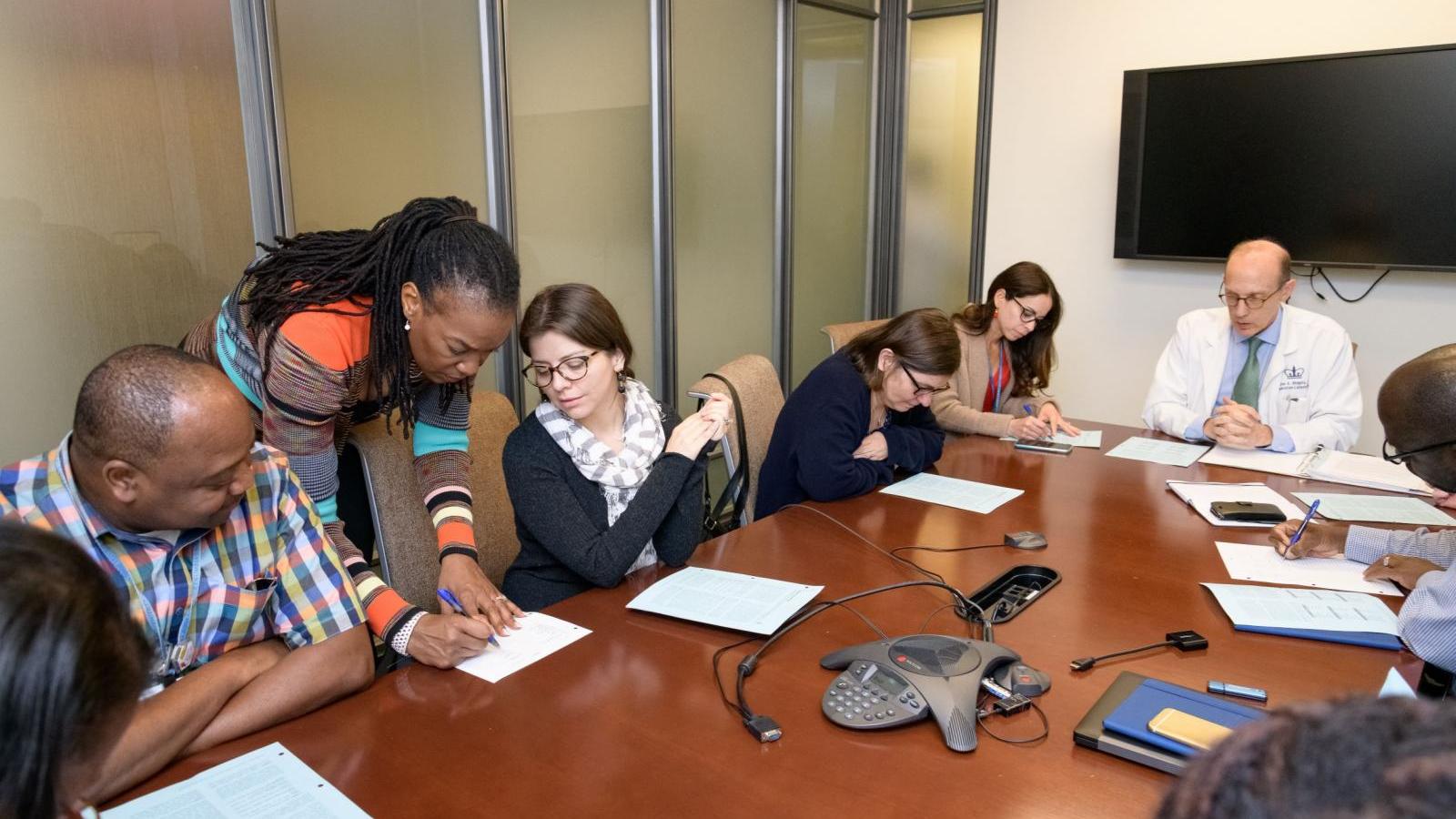
Sarah Lisanby, M.D.
Professor of Clinical Psychiatry
Founding Chief, Brain Stimulation and Therapeutic Modulation Division,
Columbia University and New York State Psychiatric Institute
Chair, Department of Psychiatry at Duke University,
Duke University
Founding Director, Brain Stimulation Service,
Founding Director, Brain Stimulation Service Line,
Dr. Lisanby was the founding Chief of the Columbia Brain Stimulation and Therapeutic Modulation Division and Professor of Clinical Psychiatry. Dr. Lisanby is now the Chair of Psychiatry at Duke University. Her research focuses on the use of emerging electromagnetic means of modulating brain function to study and treat psychiatric disorders. These techniques include transcranial magnetic stimulation (TMS), vagus nerve stimulation (VNS), magnetic seizure therapy (MST), deep brain stimulation (DBS), transcranial direct current stimulation (tDCS), and electroconvulsive therapy (ECT).
Dr. Lisanby has authored or coauthored over 150 articles, abstracts, chapters, books, reviews and editorials concerning TMS, ECT, depression, and related topics. Her articles are published in prestigious scientific journals such as New England Journal of Medicine, Archives of General Psychiatry, Clinical Neurophysiology, Neuropsychopharmacology, and Biological Psychiatry.
She became internationally recognized as a leader in the field of TMS when her research team innovated the use of TMS to perform a safer version of convulsive therapy – a procedure termed Magnetic Seizure Therapy (MST). She is principal investigator on grants from NIMH and research grants from the Stanley Foundation, the American Federation for Aging Research, and the National Alliance for Research in Schizophrenia and Depression (NARSAD) to develop MST as an alternative treatment to ECT for major depression.
Dr. Lisanby is the Chairperson of the American Psychiatric Association Task Force on ECT, the President of the International Society for Transcranial Stimulation, past President and Fellow of the Association for Convulsive Therapy, and a Member of the American College of Neuropsychopharmacology, among others. Dr. Lisanby is the recipient of over 35 honors and awards, including the Gerald L. Klerman Award presented by the National Alliance for Research in Schizophrenia and Depression, and the Max Hamilton Memorial Prize of the Collegium Internationale Neuro-Psychopharmacologicum (CINP).
Undergraduate: Duke University, B.S., 1987
Medical School: Duke University, M.D., 1991
Internship: Duke University, Psychiatry, 1991 - 1992
Residency: Duke University, Psychiatry, 1992 - 1995
Fellowship: Columbia Presbyterian Medical Center, Psychiatry, 1995 - 1998
Post-Graduate: Columbia Presbyterian Medical Center, Geriatric Psychiatry, 1995 - 1998
Board Certifications: American Board of Psychiatry and Neurology
Diplomate in Psychiatry
Diplomate in Geriatric Psychiatry
Subspeciality Certifications: Expertise in brain stimulation, including transcranial magnetic stimulation (TMS), vagus nerve stimulation (VNS), electroconvulsive therapy (ECT), deep brain stimulation (DBS), and transcranial direct current stimulation (tDCS).
• Depression and Bipolar Disorder
• Neuropsychiatry/Cognitive Disorders
• Brain Stimulation (electroconvulsive therapy – ECT; transcranial magnetic stimulation – TMS; vagus nerve stimulation – VNS; magnetic seizure therapy - MST; deep brain stimulation - DBS; transcranial direct current stimulation - tDCS)
Address:
Box 3950 Duke University Medical Center
Durham, NC 27710
USA
Dr. Lisanby specializes in the use of emerging electromagnetic means of modulating brain function to study and treat psychiatric disorders. Her program encompasses research programs (preclinical, translational, and clinical), educational activities, and clinical services at NYSPI and NYPH utilizing existing and emerging brain stimulation and neuromodulation interventions in psychiatry. Available brain stimulation techniques include deep brain stimulation (DBS), modifications of electroconvulsive therapy (ECT), magnetic seizure therapy (MST), transcranial direct current stimulation (tDCS), transcranial magnetic stimulation (TMS), vagus nerve stimulation (VNS). These techniques are applied alone as probes or therapeutic interventions, or in conjunction with functional imaging (simultaneous TMS/fMRI, TMS/PET, TMS/MRS). In addition to these stimulation and stimulation/imaging tools, the BSTM offers expertise in the neuroanatomical, cognitive and neurophysiological assessment of the impact of stimulation paradigms on brain function in the preclinical and clinical settings.
1. Luber B, Stanford AD, Bulow P, Nguyen T, Rakitin BC, Habeck C, Basner R, Stern Y, Lisanby SH : Remediation of sleep-deprivation-induced working memory impairment with fMRI-guided transcranial magnetic stimulation. Cereb Cortex 2008;18: 2077-2085
1. Kirov G, Ebmeier KP, Scott AI, Atkins M, Khalid N, Carrick L, Stanfield A, O'Carroll RE, Husain MM, Lisanby SH: Quick recovery of orientation after magnetic seizure therapy for major depressive disorder. British Journal of Psychiatry 2008;193: 152-155
1. Peterchev AV, Jalinous R, Lisanby SH: A transcranial magnetic stimulator inducing near-rectangular pulses with controllable pulse width (cTMS). IEEE Trans Biomed Eng 2008;55: 257-266
1. Lisanby SH, Husain MM, Rosenquist PB, Maixner D, Gutierrez R, Krystal A, Gilmer W, Marangell LB, Aaronson S, Daskalakis ZJ, Canterbury R, Richelson E, Sackeim HA, George MS: Daily Left Prefrontal Repetitive Transcranial Magnetic Stimulation in the Acute Treatment of Major Depression: Clinical Predictors of Outcome in a Multisite, Randomized Controlled Clinical Trial. Neuropsychopharmacology 2009;34: 522-534
1. Lisanby SH: Electroconvulsive therapy for depression. New England Journal of Medicine 2007;357: 1939-45